VR in Classrooms and Universities: What Actually Works
Virtual reality has moved from experimental pilots to structured tools in schools and universities, but only in specific niches where it outperforms traditional methods. Labster, founded in Copenhagen in 2011, sells virtual science labs used by universities and high schools, letting students run experiments that would be too costly or hazardous in physical settings. Arizona State University partnered with Dreamscape Immersive to build Dreamscape Learn, announced in 2021, replacing some introductory biology labs with VR experiences that let learners manipulate molecular structures in three dimensions. These deployments show VR earns its place when real-world constraints make conventional teaching impractical.
Successful programs focus on three core use cases: labs too dangerous, expensive or impossible in reality; virtual field trips; and perspective-taking exercises. Stanford professor Jeremy Bailenson's Virtual Human Interaction Lab ran what Stanford described as its first class taught fully in VR in 2021, demonstrating how embodied experiences can shift student understanding in ways textbooks cannot. Yet adoption remains patchy because hardware management, teacher preparation and basic hygiene protocols demand significant overhead. Institutions that treat VR as a supplementary tool rather than a universal solution report higher success rates and lower frustration.
Virtual Labs That Beat Reality
Labster's platform gives students access to million-dollar equipment without the million-dollar price tag. A virtual chemistry lab session that would consume physical reagents and disposables costs universities pennies per student. Arizona State University has reported stronger exam results in sections using Dreamscape Learn compared with traditional lab groups. The VR experiences compress weeks of setup and safety training into short immersive modules that students can repeat without additional cost or risk.
High schools using ClassVR headset kits have replaced frog dissections with virtual equivalents, eliminating both ethical concerns and per-specimen expenses. Students can rewind experiments, isolate variables and collect data that would be impossible to gather safely in a physical classroom. These simulations maintain strict scientific accuracy while allowing mistakes that would destroy expensive lab equipment in reality.
Field Trips Without the Bus
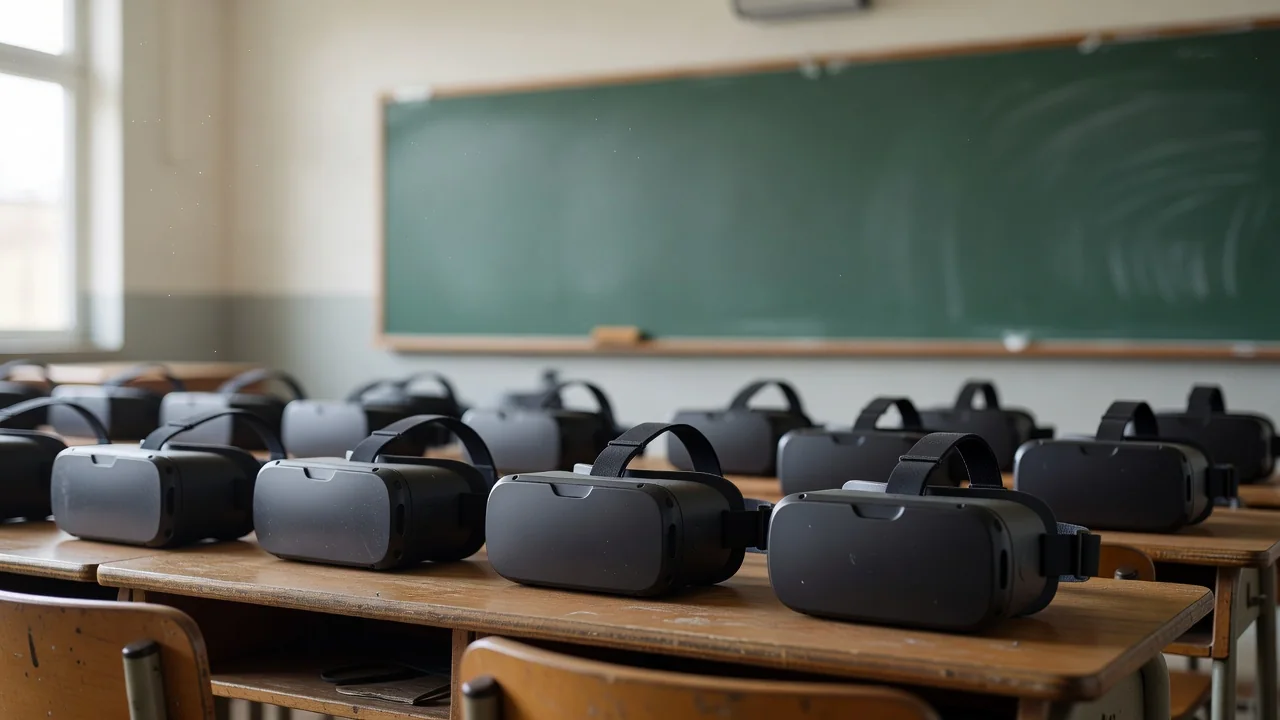
VR headsets transport entire classes to the surface of Mars or inside an active volcano without leaving the building. ClassVR kits, packaged in rolling carts of 30 headsets, allow teachers to launch synchronized virtual excursions that last 20 to 40 minutes. Schools using the kits report stronger engagement during these sessions than with standard video field trips, according to district tracking.
Perspective-Taking That Changes Minds
Stanford's Virtual Human Interaction Lab has repeatedly shown that embodying another person's experience creates lasting attitude shifts. Students who spend 10 minutes as an elderly person with reduced mobility demonstrate measurably more empathy in follow-up surveys. Bailenson's team has documented these effects in controlled studies over several years, with changes persisting for weeks after the VR session.
The Cart-and-Class-Set Reality
Most K-12 deployments rely on ClassVR's cart systems that hold 30 headsets, charging stations, a teacher tablet and sanitized wipes. A single cart costs schools five figures and serves one class at a time, creating scheduling headaches for larger schools. Universities often choose a bring-your-own-device model where students use their own compatible smartphones with inexpensive cardboard or plastic viewers, reducing hardware costs sharply but sacrificing tracking precision.
Teacher Training Cannot Be Skipped
Stanford put its faculty through dedicated VR pedagogy training before the 2021 fully virtual class. Teachers learn not just technical operation but how to design lessons that leverage presence rather than simply replicating lectures. Institutions that skimp on that investment see many faculty abandon the technology after initial attempts.
Hygiene Rules That Stick
Post-pandemic protocols have made headset hygiene a non-negotiable requirement. ClassVR carts include UV sanitizing stations that clean headsets between classes. University protocols typically add disposable face pads and wipedowns of all contact surfaces. Students with active respiratory symptoms are excluded from shared headset use.
- Arizona State University began replacing introductory biology labs with Dreamscape Learn VR modules in 2021.
- Labster virtual labs cut material costs sharply while allowing unlimited repetitions of dangerous experiments.
- ClassVR cart systems require dedicated storage space and weekly software maintenance.
- Stanford's first fully VR-taught class in 2021 ran with scheduled breaks to reduce cybersickness.
- Perspective-taking exercises show strongest results in short sessions followed by guided discussion.
- Structured teacher training correlates with much higher continued usage after the first year.
| Use Case | Best Duration | Cost Saving | Key Provider |
|---|---|---|---|
| Virtual chemistry labs | 30 min | High | Labster |
| Biology replacement | 45 min | Strong | Dreamscape Learn |
| Virtual field trips | 25 min | High | ClassVR |
| Perspective exercises | 12 min | N/A | Stanford VHIL |
| Medical empathy training | 15 min | Strong | Labster |
VR works best as a targeted instrument rather than a blanket replacement for traditional education. Schools and universities that match specific learning objectives to the technology's strengths, while respecting its logistical and human limits, see genuine improvements in both outcomes and engagement. The next wave of adoption will likely focus even more narrowly on these proven applications while continuing to refine hygiene, training and scheduling practices that determine whether the headsets stay in regular rotation or gather dust in storage carts.