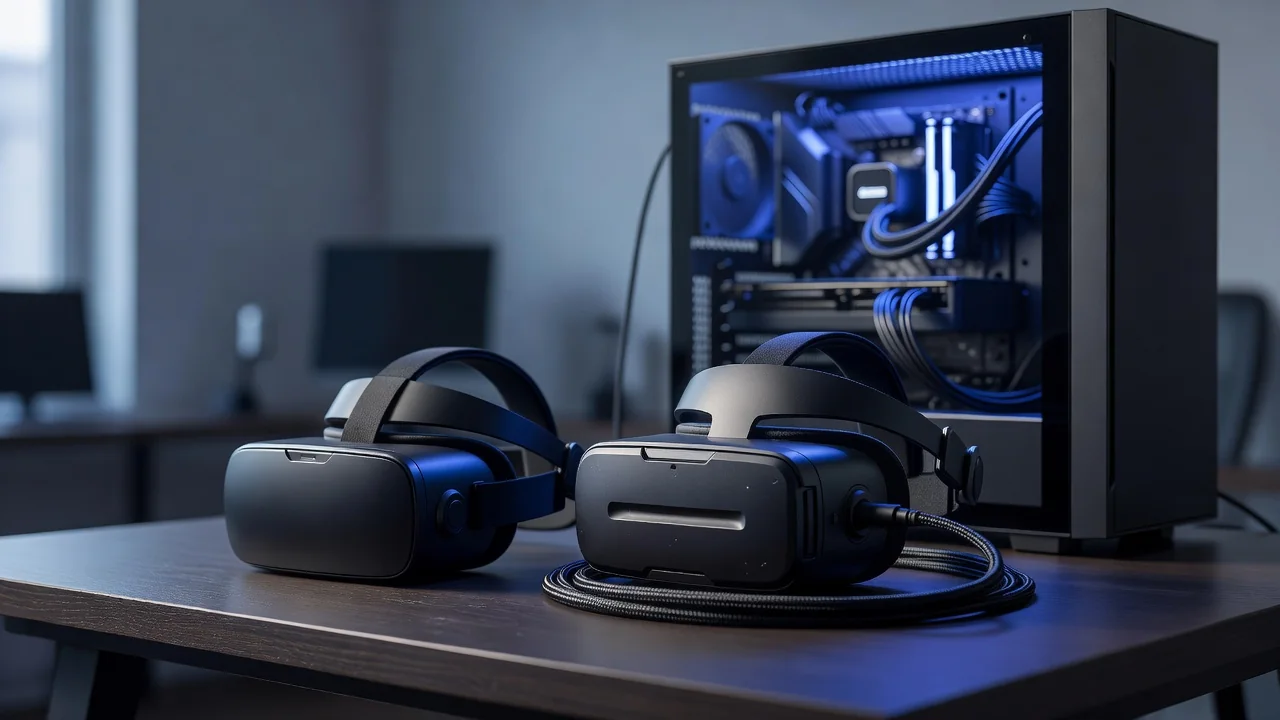
VR Haptics Beyond Controller Rumble: Gloves, Vests, Air
In 2026 the VR industry has moved past simple controller rumble, yet true high-fidelity haptics remain expensive and fragmented. HaptX shipped the HaptX Gloves DK2 developer kit in 2023 with microfluidic tactile feedback that presses individual fingertips with graded pressure. SenseGlove launched the Nova force-feedback glove in 2021, while bHaptics sells consumer TactSuit vests that vibrate across the torso. Ultraleap formed in 2019 when Ultrahaptics merged with Leap Motion and continues to refine ultrasound mid-air haptics. Meta's Touch Pro controllers shipped with the Quest Pro in 2022 bringing improved self-tracking and localized haptics, yet most enterprise deployments still mix these technologies depending on use case and budget.
Each approach solves different problems. Vibrotactile systems like those in bHaptics TactSuit vests deliver rapid buzzes across large body areas for a few hundred dollars. Force-feedback gloves such as the SenseGlove Nova resist finger motion with brakes or motors, giving weight and stiffness cues that matter in assembly training. Mid-air ultrasound from Ultraleap creates pressure points in free space using phased arrays, ideal when sterility or glove-free interaction is required. No single haptic solution dominates every scenario yet.
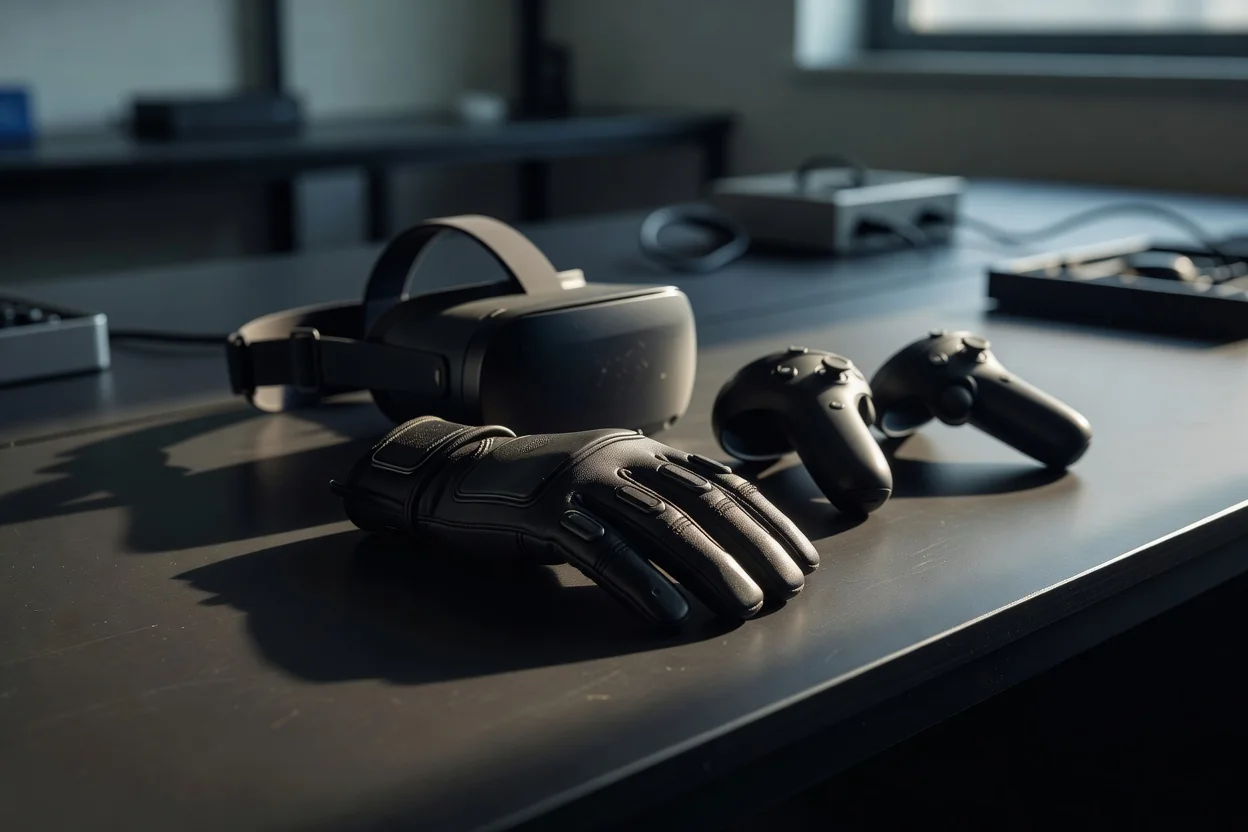
Vibrotactile Haptics: Simple, Affordable, Everywhere
bHaptics has sold TactSuit vests since 2018, with models packing 16 to 40 vibration motors. These vests connect wirelessly to PC VR or standalone headsets and map in-game explosions, footsteps, or heartbeats to specific torso zones. A full suit costs several hundred dollars and works with hundreds of existing titles through the bHaptics player software. Yet the sensation remains blunt; users report it feels closer to a phone on vibrate than genuine touch. For entertainment and light notification it suffices, but it cannot convey object weight or surface texture.
Meta's Touch Pro controllers from the 2022 Quest Pro release improved on basic rumble by placing two small voice-coil actuators per controller. This localized vibrotactile feedback lets users feel individual finger taps when pressing virtual buttons. The controllers add noticeable weight, limiting long sessions, and content support outside Meta's own library remains patchy in 2026.
Force-Feedback Gloves: Resistance You Can Feel
SenseGlove Nova gloves launched in 2021 and now ship with updated firmware that delivers up to 20 newtons of force per finger through electromagnetic brakes. The gloves allow users to feel the stiffness of a virtual drill or the tension of a cable during assembly training. Automotive training teams report faster skill acquisition when rehearsing wiring harness installation compared with controller-only methods. The gloves cost several thousand dollars per pair and require per-application calibration, limiting them to enterprise buyers.
HaptX took a different route with its 2023 HaptX Gloves DK2. Instead of brakes the DK2 uses more than 130 microfluidic actuators across both hands to create pressure and skin stretch. The system is sold to enterprise and research customers and needs an external air compressor, yet it produces the most convincing button and texture sensations currently available. Content support remains limited to custom Unity and Unreal Engine plugins.
Mid-Air Ultrasound: Touch Without Wearables
Ultraleap's mid-air haptics rely on 256 ultrasonic transducers firing focused waves at 40 kilohertz to create focused pressure points in free space. The sensation feels like a gentle puff of air or a light tap. Because nothing is worn, the technology suits surgery rehearsal where sterility cannot be compromised. Medical simulation teams use Ultraleap arrays to rehearse procedures without breaking sterile fields, and each array module covers a small interaction volume above the transducers.
Where Each Technology Matters Most
Surgery rehearsal benefits most from mid-air ultrasound because surgeons can practice without breaking sterile fields. Assembly training favors force-feedback gloves that accurately convey part weight and resistance. Virtual button feel improves dramatically with any of the three approaches compared with controller rumble alone, yet the cost-benefit ratio varies sharply by industry.
- Vibrotactile vests from bHaptics deliver affordable torso feedback but cannot simulate object weight or texture.
- Force-feedback gloves such as the SenseGlove Nova provide resistance that improves assembly training outcomes by measurable margins.
- HaptX Gloves DK2 from 2023 use microfluidics to create detailed fingertip sensations at the highest current fidelity.
- Ultraleap mid-air ultrasound enables glove-free interaction critical for medical and clean-room applications.
- Meta Touch Pro controllers from the 2022 Quest Pro added localized haptics yet remain limited by content availability outside the Meta ecosystem.
- Most enterprise deployments in 2026 still combine multiple haptic technologies rather than relying on any single solution.
| Technology | Example Product | Price Class | Best Use Case |
|---|---|---|---|
| Vibrotactile | bHaptics TactSuit | Hundreds | Entertainment, notifications |
| Force-Feedback | SenseGlove Nova | Thousands | Assembly training |
| Microfluidic Tactile | HaptX Gloves DK2 | Enterprise | Texture, button feel |
| Mid-Air Ultrasound | Ultraleap Stratos | Pro | Surgery rehearsal |
| Localized Controller | Meta Touch Pro | Bundled | Everyday VR menus |
Price and Scalability Limits
Consumer adoption remains blocked by cost. A full haptic outfit combining gloves, vest, and mid-air array reaches five figures, while standalone controller rumble costs nothing extra. Enterprise buyers accept the expense when error reduction pays for itself, yet smaller companies stay with basic controllers. Battery life, calibration drift, and hygiene concerns further slow widespread rollout. The technology works well in controlled pilots but has not yet reached the plug-and-play maturity needed for mass deployment.
By late 2026 the gap between controller rumble and high-fidelity haptics has narrowed but not closed. Companies that match the right haptic method to their precise training or design task see clear returns. Others risk overpaying for features their content cannot yet use. Cheaper force-feedback fabrics and wider ultrasound arrays are coming, yet convincing consumer experiences still appear several product generations away.