VR Headsets for Business: What a First Setup Really Costs
In 2026, businesses exploring VR for training, design reviews, or customer experiences quickly discover that the headset price is only the opening act. A thoughtful first setup demands attention to hidden costs that can easily triple the initial hardware spend. From content that actually works in your environment to the daily logistics of keeping headsets clean and updated, budgeting realistically separates successful pilots from expensive experiments.
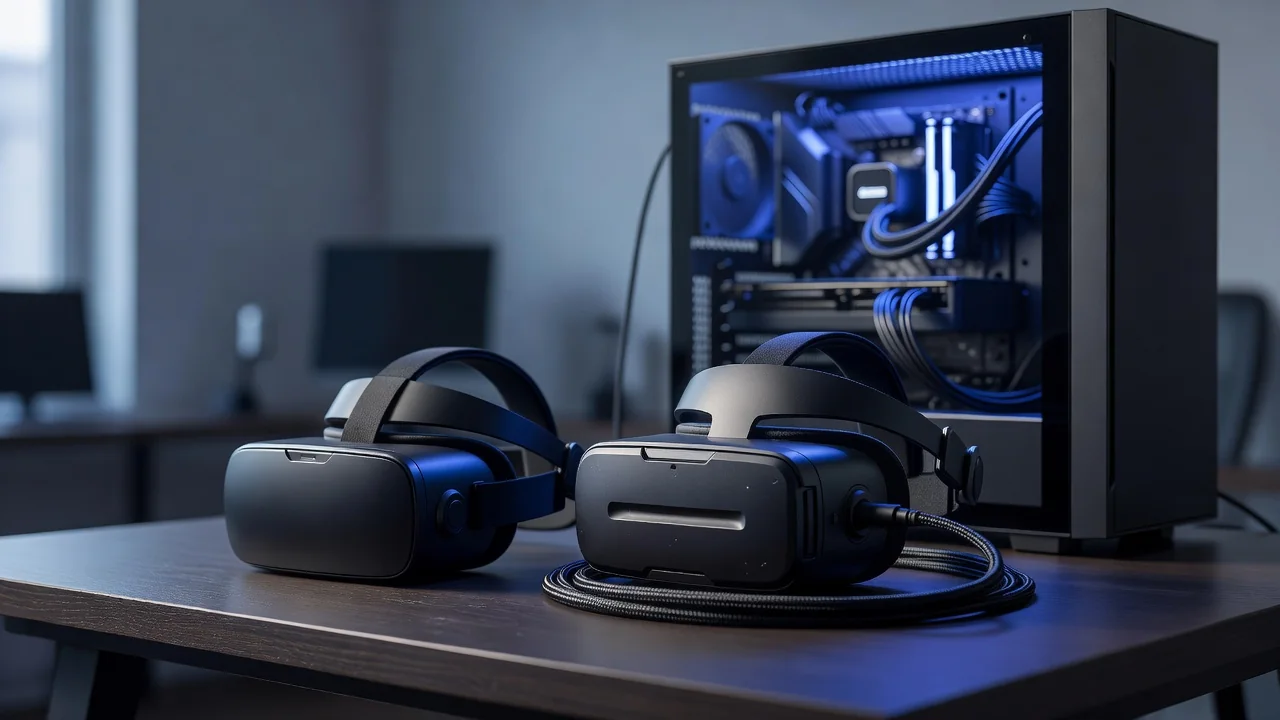
Choosing between standalone and PC-tethered headsets shapes the entire cost structure. Standalone units offer simplicity and lower upfront infrastructure demands but may limit graphical fidelity for complex engineering models. PC-tethered systems deliver higher performance at the expense of additional computers, cabling, and technical support. Most companies testing the waters begin with mid-tier devices in the $450–$850 range for standalones and $900–$1,800 for tethered setups when including the required base stations or high-spec PCs.
Content: The Real Budget Driver
Custom VR experiences rarely come cheap. Whether you hire an agency to build a 3D product configurator or develop internal training modules, professional content production typically accounts for 45-65% of a first-year budget. Simpler 360-video projects might start around $8,000–$15,000, while fully interactive environments with hand tracking and realistic physics can exceed $45,000. Many teams begin with off-the-shelf templates and customize only the critical elements, keeping initial content costs between $12,000 and $25,000 for a meaningful pilot.
Operational Realities
Beyond hardware and content, practical considerations add up quickly. Device management platforms that handle updates, usage analytics, and remote locking cost $180–$450 per headset annually. For shared headsets, hygiene becomes non-negotiable: disposable face covers, cleaning stations, and UV sanitizers add $35–$70 per unit per month. Companies running frequent demos often budget for one spare headset for every five in active use, plus extended warranties that cover accidental damage during the learning phase.
Staff time is frequently underestimated. A part-time VR coordinator handling scheduling, basic troubleshooting, and session facilitation might require 12–18 hours weekly during the pilot phase. At average 2026 salaries, this translates to $18,000–$28,000 in fully-loaded annual cost for a modest program. Training internal champions and creating simple usage protocols further increases the first-year investment.
| Cost Category | Typical Share of First-Year Budget | Small Pilot Range (5 headsets) |
|---|---|---|
| Hardware (headsets + PCs) | 18-25% | $9,000 – $16,000 |
| Content Production | 45-60% | $15,000 – $32,000 |
| Management & Software | 8-12% | $3,000 – $5,500 |
| Hygiene & Consumables | 4-7% | $2,000 – $4,000 |
| Staff Time & Training | 12-18% | $12,000 – $22,000 |
| Spare Units & Contingency | 5-9% | $4,000 – $7,000 |
A Realistic Small Pilot Budget
Consider a manufacturing company launching a five-headset pilot for assembly training and remote design reviews. A conservative 2026 budget might look like this: $13,500 for five mid-tier standalone headsets plus charging docks, $19,000 for customized training modules built on a licensed platform, $4,200 for a device management subscription and basic analytics, $2,800 for hygiene supplies and cleaning infrastructure across the year, $17,000 for 15 hours weekly of coordinator time, and $5,500 set aside for one spare unit, extended warranties, and unexpected repairs.
Total first-year investment lands between $55,000 and $68,000 depending on content complexity. The second year typically drops 35-45% as content is reused and operational processes become routine. Companies that treat the pilot as an iterative learning process rather than a one-off purchase see the clearest returns. Successful setups begin small, measure engagement and knowledge retention carefully, and scale only after proving tangible business value.
- Start with clear success metrics before purchasing any hardware
- Factor in at least 2.5× the headset cost for the full first-year budget
- Build in time for staff to become comfortable facilitating VR sessions
- Plan hygiene and storage solutions from day one to avoid adoption barriers
- Budget for iteration of content based on real user feedback
By understanding these cost layers early, business leaders can approach VR with realistic expectations and create experiences that deliver genuine value rather than collecting dust after the initial excitement fades.