
Enterprise VR: From Pilot to Company-Wide Rollout
Scaling enterprise VR from a five-headset pilot to a managed fleet of hundreds demands more than simply buying extra hardware. Companies quickly discover that without centralized control, devices scatter, firmware drifts, and security gaps widen. In 2024, firms turning to dedicated platforms report cutting deployment time from weeks to days while maintaining consistent experiences across sites. The transition hinges on mobile device management tailored for VR, remote provisioning, and physical logistics that treat headsets like shared industrial tools rather than consumer gadgets.
Meta launched its Quest for Business subscription in late 2023, giving IT teams account-level controls and the ability to push approved apps to hundreds of devices without individual logins. For organizations using PICO hardware, the PICO Business Suite offers similar remote management features focused on enterprise deployments. When these tools are paired with purpose-built VR MDM solutions such as ArborXR and ManageXR, administrators gain kiosk mode, Wi-Fi certificate deployment, usage analytics, and over-the-air updates that keep every headset in the fleet synchronized. The result is a shift from chaotic pilots to predictable, auditable operations that justify the investment in scale.
Choosing the Right MDM Layer
ArborXR and ManageXR were built exclusively for immersive hardware, offering deeper insight into battery health, crash logs, and session duration than general MDM platforms. Fleet managers using ManageXR report sharply fewer support tickets once automatic app updates and remote factory resets are enforced across every device. These platforms also integrate with existing enterprise identity systems, allowing single sign-on that pilots rarely implement. The added cost of dedicated VR MDM typically runs from a few dollars to low double digits per device per month depending on fleet size and features selected.
Meta Quest for Business and PICO Business Suite
Meta’s late-2023 Quest for Business subscription simplified account management by moving away from personal Facebook logins toward organization-managed accounts. Administrators can now purchase devices in bulk, assign them to departments, and revoke access instantly when employees leave. PICO Business Suite delivers comparable controls for PICO 4 Enterprise devices, including region-specific content restrictions required by European manufacturers. Both systems support remote app deployment, so a new training module reaches every headset overnight without manual intervention.
Kiosk Mode and Device Lockdown
Kiosk mode locks a headset to a single application or playlist, eliminating distractions and reducing the risk of employees sideloading unauthorized software. In large manufacturing pilots, kiosk mode has ensured every line worker enters the same safety simulation without deviation. The feature also simplifies onboarding for temporary staff who only need 15 minutes of training before using the device. When combined with automatic guest profiles, kiosk mode supports true shared-device hygiene by resetting the environment between shifts.
Wi-Fi Provisioning and Remote Management
Enterprise networks rarely allow open SSID connections, so IT teams must provision certificates and VPN profiles before devices leave the loading dock. ArborXR handles this through bulk enrollment that applies unique credentials to each headset in under two minutes. Remote app deployment then pushes version-controlled training content or maintenance guides without requiring physical access. Companies with distributed facilities report that centralized Wi-Fi provisioning alone prevents most of the connectivity failures that plagued early pilots.
Shared-Device Hygiene and Spare-Unit Strategy
Headsets passed between shifts accumulate skin oils and bacteria unless hygiene protocols are enforced. Leading deployments maintain a 15 percent spare-unit pool so dirty devices can be rotated into a cleaning station while fresh units are issued. A large logistics fleet might keep dozens of spares charged and updated at all times, allowing immediate swaps when batteries run low during a shift. This approach keeps utilization high while protecting employee comfort and health standards.
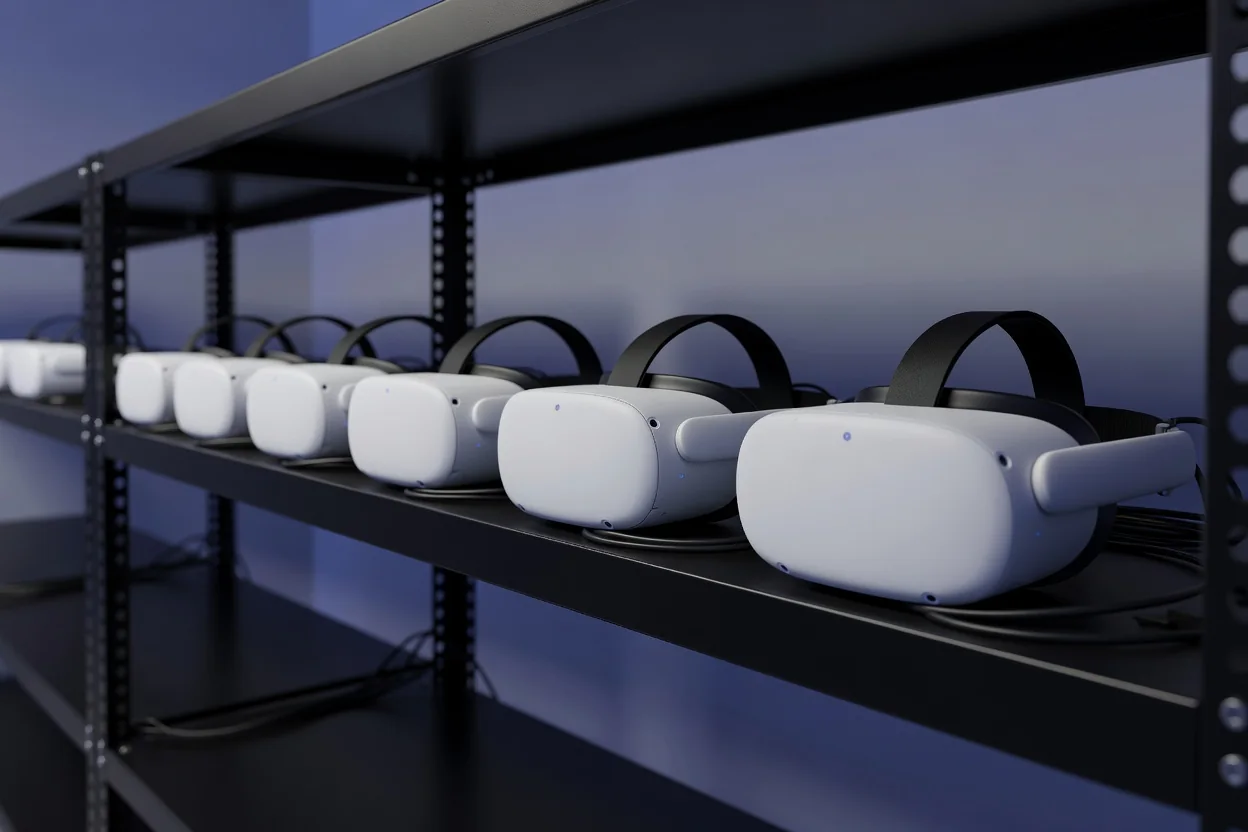
- Charging and storage logistics become critical once a fleet exceeds 50 headsets and require dedicated racks with individual power monitoring.
- IT teams schedule firmware updates during off-peak hours to avoid disrupting production lines that depend on VR for daily briefings.
- Usage analytics from MDM platforms help identify underutilized devices that can be reallocated before new purchases are approved.
- Shared-device pools must include clear labeling and RFID tags so support staff can locate specific headsets within minutes.
- Regular lens and strap cleaning stations with UV sanitizers reduce infection concerns and extend hardware lifespan.
- Spare-unit pools should be sized at 10-20 percent of the active fleet to maintain continuous operations during repairs or software validation.
| Solution | Key Feature | Pricing | Best For |
|---|---|---|---|
| Meta Quest for Business | Account management | from $15 | Quest fleets |
| PICO Business Suite | Regional controls | varies | PICO devices |
| ArborXR | Analytics + kiosk | per device | Mixed headsets |
| ManageXR | Remote updates | per device | Large deployments |
| Shared spares | 15% pool | — | Shift work |
Fleets of hundreds are not always worth the overhead. When training occurs only a few times per year or the use case is limited to a single small team, the cost and complexity of MDM, spares, and charging infrastructure can outweigh the benefits. In those cases many organizations continue to rely on simple shared headsets managed by a single coordinator rather than enterprise-grade rollout systems.