Showroom VR, WebAR or Headset Demo: Choosing the Right Format
In 2026, companies showcasing complex products—from industrial machinery to luxury furniture—face a genuine choice in immersive formats. The decision should never begin with “which technology is coolest.” Instead, start by asking two questions: how many people need to experience the product, and at what stage of the decision journey are they? Early awareness favors broad, low-friction access. Late-stage evaluation rewards depth and presence. Three practical delivery methods dominate: physical showroom VR stations, browser-based WebAR, and standalone headset demos shipped to clients or used at events.
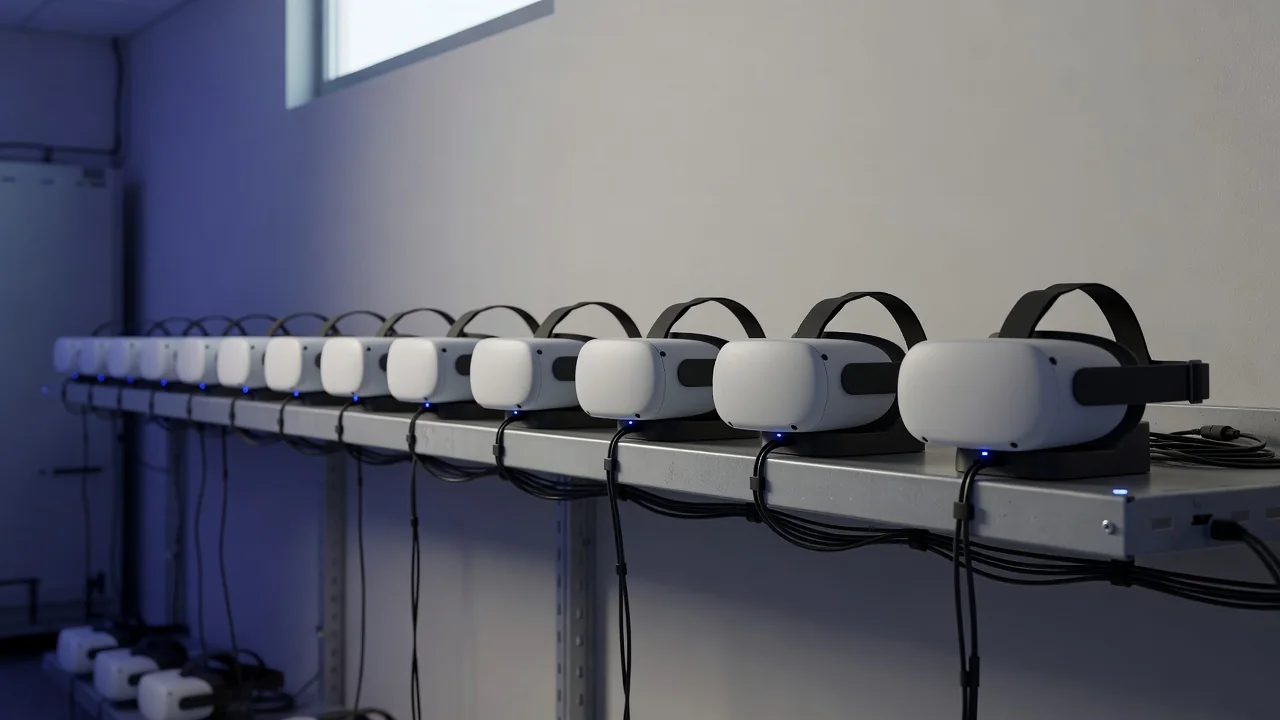
Physical showroom VR stations still deliver the highest emotional impact for flagship locations. Visitors step into a dedicated booth, slip on a high-end headset, and explore life-sized digital twins with zero distractions. Yet this approach reaches only those willing to travel. WebAR, by contrast, lets anyone tap a link on their phone and see the product appear in their own room within seconds. Headset demos occupy a middle ground: the full power of dedicated VR delivered where the customer already is—trade shows, headquarters, or even their own office via overnight courier.
Reach and Audience Fit
WebAR wins on sheer numbers. A single campaign can reach tens of thousands without logistics. Showroom stations serve dozens per day at best. Headset demos scale through careful scheduling—perhaps 200–300 qualified prospects per month when shipped in rotation. For top-of-funnel awareness, WebAR is unmatched. For final contract decisions involving engineers or procurement teams, the tactile confidence of a dedicated headset often closes the gap that a phone screen cannot.
Cost per Viewer and Operational Reality
Cost behaves differently across formats. Showroom installations carry high fixed costs in space, staff training, and hardware refresh cycles. Once built, however, the marginal cost per additional visitor drops quickly. WebAR spreads development expense across unlimited viewers, making it economical for mass campaigns, though conversion quality may require follow-up. Headset demos balance both: initial content creation is comparable to showroom work, but each unit can be reused across many clients with relatively low shipping and sanitization overhead.
Maintenance burden follows similar logic. Showroom stations demand on-site technicians and regular calibration. WebAR lives in the cloud—update the experience once and every phone instantly reflects the change. Headset demos require careful asset optimization and occasional firmware management, but modern standalone units have simplified this dramatically compared with earlier generations.
Content Requirements
Each format imposes different creative discipline. Showroom and headset experiences can use rich, high-poly models, complex lighting, spatial audio, and multi-minute guided narratives. WebAR demands aggressive optimization: models under 5 MB, simplified shaders, and interactions that survive varying phone hardware. The same 3D asset rarely works perfectly across all three without targeted versions. Smart teams now author a single source file and use automated pipelines to generate format-specific variants, yet human review remains essential.
| Criteria | Showroom VR Station | WebAR (Phone Browser) | Standalone Headset Demo |
|---|---|---|---|
| Typical reach per month | 200–800 visitors | 10,000–250,000+ | 150–500 qualified prospects |
| Cost per engaged viewer | Medium to high | Very low | Medium |
| Setup & maintenance | High (on-site staff, calibration) | Low (cloud updates) | Medium (shipping, hygiene, updates) |
| Immersion & presence | Excellent | Moderate | Excellent |
| Content optimization needed | Low | High | Medium |
| Best decision stage | Final evaluation, VIP visits | Awareness, early consideration | Technical validation, group demos |
The clearest advice in 2026 is to sequence rather than choose. Begin with WebAR to cast a wide net and gather intent data. Follow interested prospects with an invitation to a headset demo—either at an event or shipped directly. Reserve physical showroom experiences for the largest deals and strategic accounts where the investment in travel and time is justified. This layered approach respects both audience size and decision stage while balancing cost and impact.
Whichever format leads, success still hinges on the underlying 3D content. Accurate scale, realistic materials, and thoughtful interaction design matter more than the delivery box it arrives in. Companies that master the content first, then adapt it intelligently across formats, consistently see the highest return on their immersive investments.
- Map your customer journey before picking hardware
- Budget for at least two optimized versions of every model
- Measure completion rates, not just view counts
- Test on real target devices, not just flagship phones