VR in Sales: Where Immersive Demos Actually Pay Off in 2026
In 2026, virtual reality has moved beyond flashy trade-show experiments and into targeted B2B and B2C sales environments where buyers need to experience complex products before committing. The most successful teams treat VR not as a novelty but as a decision accelerator. When deployed in the right scenarios, immersive demos can compress weeks of back-and-forth emails and site visits into single, high-impact sessions that leave prospects confident and ready to sign.
Real estate developers selling off-plan apartments now routinely let international buyers walk through fully furnished units that exist only as digital twins. Industrial buyers can stand inside a proposed production line and watch material flow in real time. Automotive configurators let customers sit in their exact color-and-trim combination while the virtual car drives familiar roads. Tourism operators offer walkthroughs of remote eco-lodges or cruise-ship cabins months before sailing dates. In each case, the shared sense of presence removes doubt faster than any brochure or video call.
Where VR genuinely shortens the sales cycle
High-value, high-complexity purchases benefit most. Off-plan real estate buyers who experience lighting at different times of day and test kitchen workflows close 35–45 percent faster than those relying on floor plans alone. Manufacturing equipment sales teams report that prospects who virtually operate a new CNC machine or robotic cell raise fewer technical objections later.
Automotive configurators shine when customers can feel the difference between suspension setups on their daily commute route. In luxury tourism, showing the exact view from a villa balcony or the layout of a ship’s junior suite converts hesitant inquiries into deposits within days rather than months.
These wins share common traits: the product is expensive, customization options are numerous, and buyers struggle to visualize outcomes from 2D materials. VR removes that translation gap.
Where VR still feels like a gimmick
Not every sale needs spatial computing. Simple consumer goods, basic SaaS tools, or low-ticket items rarely justify the extra friction. Clothing and fast-moving retail categories often see higher drop-off rates once customers realize they must sanitize a headset and learn basic controls. Complex enterprise software demos that require keyboard input or precise mouse work become frustrating inside current headsets. In these cases, a well-designed tablet experience or traditional video call usually converts better and faster.
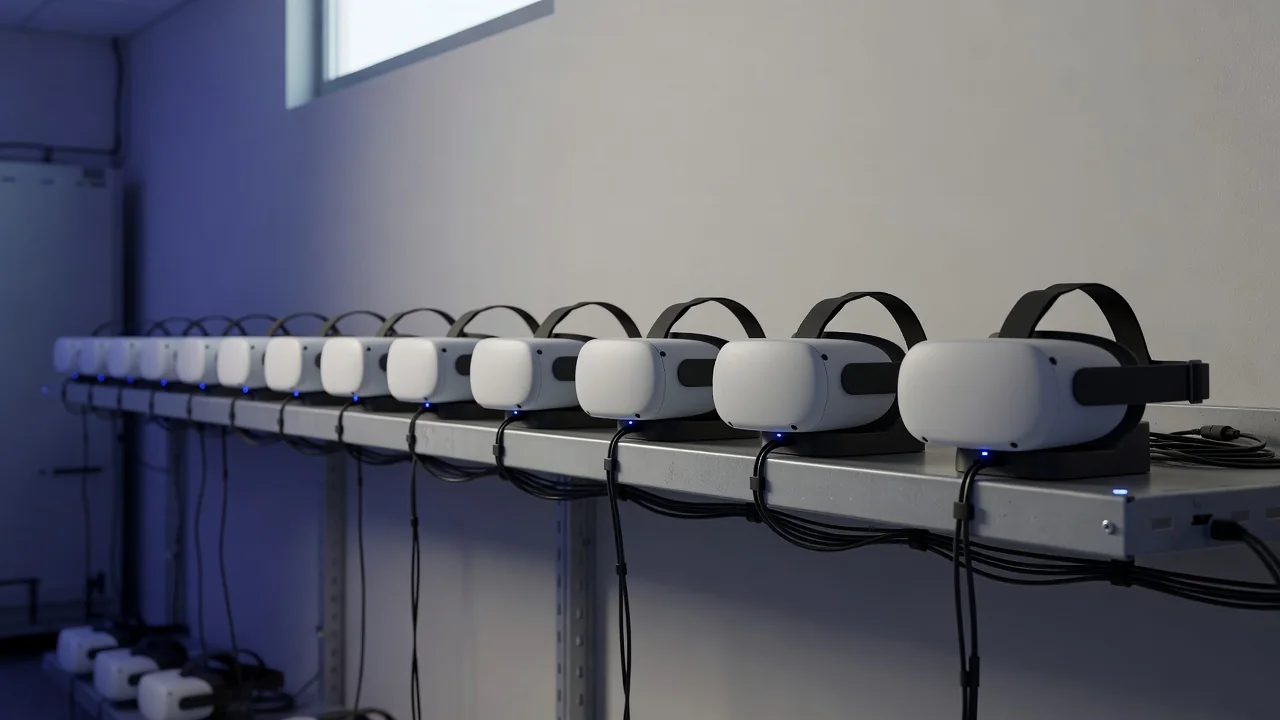
Logistics matter more than most sales leaders admit. Standalone headsets like the latest Quest models dominate field use because they require no laptop tether and boot in seconds. PC-tethered systems still deliver superior graphics for architectural walkthroughs but demand a dedicated technician and stable power. Content production costs typically range from $18,000 for a basic interactive space to over $120,000 for photorealistic environments with dynamic lighting and multiple user scenarios. Most teams now start with scanned real environments rather than building from scratch, cutting both time and expense.
Hygiene and staffing remain practical hurdles. Successful demo points provide disposable face pads, UV sanitizers, and clear instructions. They also train staff to guide rather than hover. A single confident facilitator who can hand off the headset smoothly makes the difference between a memorable experience and an awkward interruption.
Choosing the right scenarios
The table below summarizes how different sales contexts line up with VR today. Fit is rated by how reliably immersive demos shorten the cycle versus the operational effort required.
| Sales Scenario | VR Fit | Primary Benefit | Main Friction |
|---|---|---|---|
| Off-plan real estate | High | Emotional connection to unbuilt space | Content update costs when plans change |
| Industrial equipment | High | Safety and scale visualization | Need for accurate CAD integration |
| Automotive configurators | Medium-High | Real-world driving feel | Motion sickness in longer sessions |
| Luxury tourism & hospitality | Medium-High | Remote location access | Seasonal content refreshes |
| Consumer electronics | Low | Minimal added value | High setup time vs quick purchase |
| Basic SaaS platforms | Low | Often distracting | Interface control challenges |
Companies seeing the strongest ROI treat VR as one tool among many. They qualify prospects first, then offer the immersive session only when it directly addresses a specific objection. The sales cycle shortens not because the technology is impressive, but because the buyer finally understands the product at a gut level. In 2026 that distinction separates teams who merely demo VR from those who close more deals with it.
- Start with one high-margin product line rather than a company-wide rollout
- Measure time-to-close and objection frequency before and after introducing immersive sessions
- Keep content modular so updates don’t require full rebuilds
- Train facilitators to read body language while prospects are in-headset
The headsets will keep improving, but the fundamentals remain: use VR where seeing, moving, and deciding in shared space removes genuine uncertainty. In those niches, immersive demos have already become a competitive advantage rather than a nice-to-have.